Somatic Training Australia | Breathwork & Myofascial Release
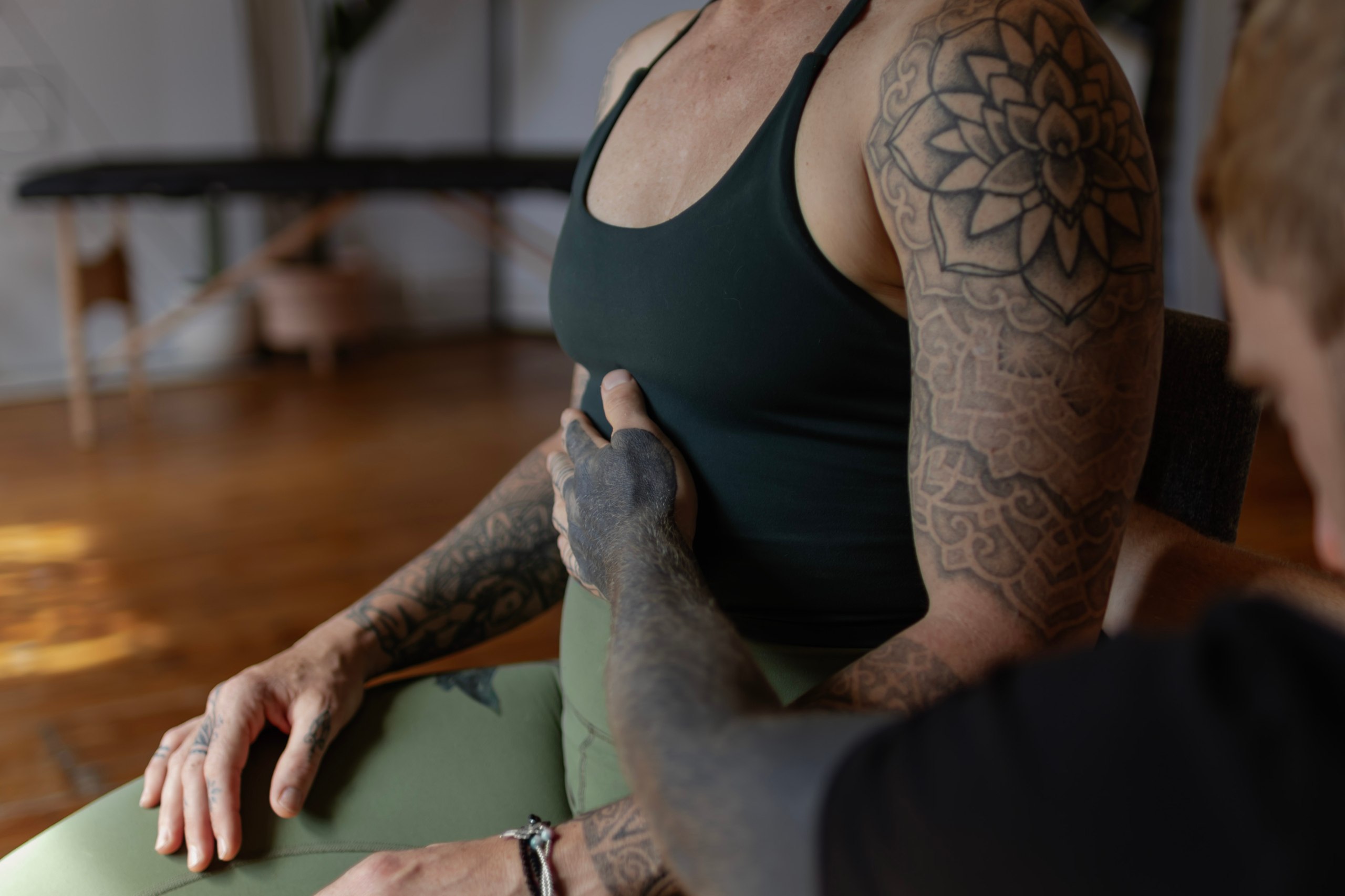
What does it mean to work with the body—not simply apply a technique to it? For massage therapists, myotherapists and bodywork practitioners, this question opens a different conversation about touch, attention and the client’s experience.
Our somatic training program in Australia brings together breathwork, myofascial release and practical somatic skills. At the heart of this approach is embodiment: noticing experience while preserving the freedom to move, speak, change direction or stop. Rather than placing technique above the person, the approach keeps awareness, practitioner presence and ongoing consent in the foreground.
What is somatic bodywork training?
In our approach, somatic bodywork training brings the person’s felt experience into the conversation alongside hands-on practice. It considers internal sensations, movement, physical support and awareness of the surrounding environment. It also asks how a practitioner can remain curious without deciding what a client’s experience must mean.
Somatic skills for massage therapists are therefore more than prompts to “feel into the body”. They include listening to stated preferences, recognising when inward attention is unwelcome, offering choices and checking consent. Somatic awareness is an invitation—not another task the client has to perform successfully.
Embodiment is more than looking inward
Embodiment in bodywork does not require sustained inward attention. The webinar material describes a flexible relationship between different fields of awareness:
- Interoception: noticing internal signals, such as temperature, hunger or heartbeat.
- Proprioception: awareness of position, movement, weight and physical support.
- Exteroception: receiving information from the environment through the senses.
A client may prefer to notice the room rather than an internal sensation, keep their eyes open or change position. These choices belong within the practice. Difficulty with body awareness is not necessarily a failure of attention: vigilance, numbing or overthinking may be protective responses. The practitioner need not push through them or assign them a diagnosis.
Breathwork and somatic awareness: keeping choice central
Breathwork is one component of our integrated training, alongside myofascial release and somatic skills. Within the consent-led framework explored here, attention to breathing is not a demand to become calm, reach a particular state or produce a visible response.
Someone may choose not to focus on their breath, or may prefer an external point of attention. Respecting that preference keeps participation voluntary. If you are comparing breathwork training in Australia, look for clear information about the methods taught, participation choices, professional scope and the boundaries of the qualification offered.
Bringing somatic awareness into myofascial release
Myofascial release is another part of our program. The somatic perspective adds a question alongside the hands-on work: how is this experience being understood and chosen by the person receiving it?
A sensation or area of tension does not prove an emotional story. Health, fatigue, circumstances and the client’s own account remain relevant. Integrating somatic awareness into myofascial release means making room for that account without interpreting tissue tension as evidence of trauma or promising an emotional release.
For practitioners considering myofascial release training in Australia, this distinction matters. Technical learning and respectful engagement are not competing priorities. The proposed contact can be explained, preferences can be checked and the client can remain an active participant in decisions about the session.
Consent-led bodywork: touch remains a conversation
Consent in massage therapy is not settled once at the beginning of an appointment. In this framework, it continues before contact, before a change, whenever there is uncertainty and after a pause. Preferences remain changeable throughout.
Silence, stillness and compliance do not establish ongoing consent. Nor does apparent calmness determine whether the next action is appropriate. When permission is unclear, pause and check rather than infer meaning from a bodily cue.
This is central to the trauma-informed bodywork principles discussed in the webinar: choice, collaboration, no forced disclosure and no unsupported interpretation. Participants may observe rather than practise, and clients may decline an invitation without having to explain why.
Practitioner presence and respectful somatic skills
Somatic awareness for practitioners includes noticing their own responses. An urge to fix, reassure or create a “successful” outcome can be a reason to pause and check assumptions. Practitioner presence means attending to what the client has actually communicated, rather than allowing urgency or a preferred result to direct care.
The webinar also introduces IFS-informed language as an optional way of relating to inner experience. “A part of me feels anxious” can create a noticing relationship without requiring the feeling to disappear. Internal Family Systems is a therapeutic model; its language is not an anatomical explanation or a diagnosis.
This educational material does not qualify participants to provide IFS psychotherapy, memory work or trauma treatment. Professional application depends on existing qualifications, scope, supervision and jurisdiction. If awareness becomes overwhelming or clear consent cannot be established, the material prioritises stopping the practice and following appropriate professional procedures.
Choosing somatic training in Australia
When exploring somatic professional development in Australia, look beyond a list of techniques. Ask how the training connects hands-on learning with body awareness, communication and professional boundaries.
- How are breathwork, myofascial release and somatic skills brought together?
- What choices are available during practical learning?
- How are consent and practitioner self-awareness addressed?
- What prerequisites, supervision and scope boundaries apply?
- What does completion qualify you to do—and what does it not?
For massage therapists, myotherapists and other bodywork practitioners, these questions offer a practical way to assess whether a program fits their learning goals. An integrated approach need not promise transformation or guaranteed clinical outcomes to offer a clear educational direction.
Professionally Endorsed Somatic Training in Australia
Explore our somatic training program
Our Australian somatic training program brings breathwork, myofascial release and somatic skills into a shared learning pathway. The principles explored here offer a starting point: remain curious, respect protective responses and let ongoing consent guide what happens next.
Ready to explore this approach in more depth? View the full training program to learn about the curriculum, participation requirements and upcoming Australian training opportunities.